

Homeowner guide
Winter Springs & Tuscawilla
Understand the options. Plan the work. Know what to expect.
A breaker that keeps tripping, an older electrical panel or plans for an EV charger can all raise the same question: do I need a new panel?
Start with what is happening now and what you want the home to support. A repair, a replacement panel and a larger electrical service solve different problems. At Specialty Product Installers, we assess the existing equipment and planned work before recommending a scope.
Request a Panel Estimate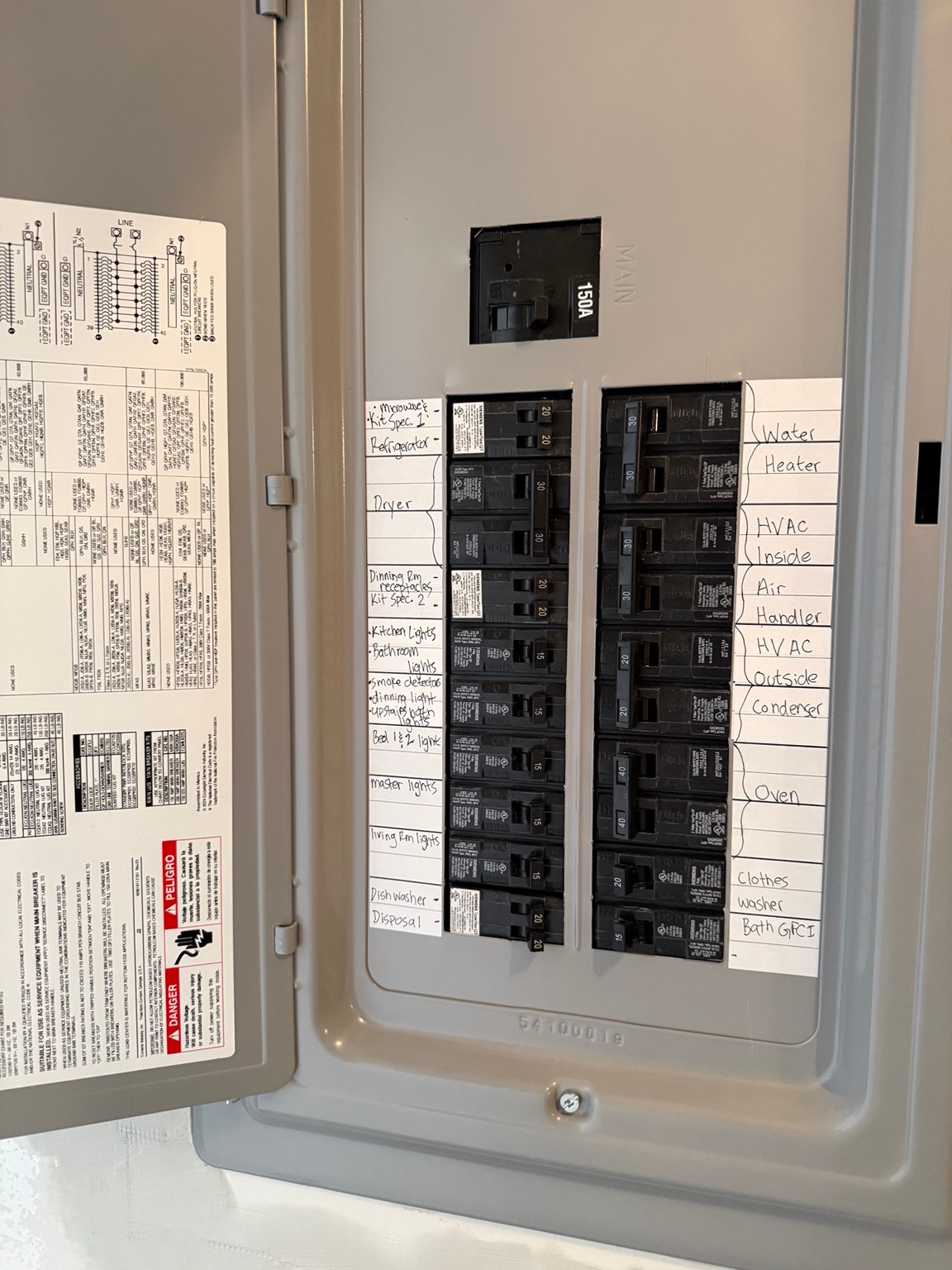
1. Understand what needs to change
A repair addresses a specific problem. Repeated breaker trips can involve the appliance, the circuit or the electrical equipment. They deserve diagnosis rather than an automatic recommendation to replace the entire panel. UL Solutions: electrical warning signs
A panel replacement changes the equipment. Replacement may be appropriate when the panel is damaged, deteriorated or unsuitable for the work being planned. It does not automatically increase the amount of power available to the home. The condition of the equipment and the capacity of the service are separate questions. NYSERDA: home electrical panels
A service upgrade increases available capacity. This can involve more than the breaker panel, including service conductors, meter equipment and utility coordination. The work depends on the existing installation and the capacity being requested. ENERGY STAR: making your home electric ready
The number on a panel’s equipment label is not, by itself, confirmation of the home’s service capacity. A new box with a higher rating cannot make the rest of the electrical system support that rating. Ask what capacity the completed installation will actually provide. NYS Clean Heat: assessing residential electrical service
2. Check capacity before buying new equipment
If you are planning an EV charger, major appliance, workshop or addition, tell the electrician about the whole project. Include changes you expect to make soon, even if they are not part of the first phase.
Available breaker spaces and available electrical capacity are different things. An empty space does not prove the service can support another large load. A site assessment and load calculation help determine what the existing system can support. U.S. Department of Energy: residential charging assessment
A larger service is not the only possible answer. For some homes, properly selected load-management equipment can help accommodate a new load without increasing service size. Suitability, equipment compatibility and local requirements must be checked for the actual installation. BC Hydro: capacity and load management
3. Know when to arrange a diagnostic
Frequent breaker trips, lights dimming when other equipment starts, buzzing from outlets or switches, or discolored outlets are reasons to have the system evaluated. These symptoms do not identify the cause on their own. Electrical Safety Foundation: home electrical safety
For a planned upgrade, schedule a panel assessment. For an existing electrical problem, call SPI at (321) 349-0006 to discuss a diagnostic.
4. What affects the price?
Two proposals called a “panel upgrade” may describe very different jobs. Compare the work included before comparing the totals.
The main questions are:
- What is being replaced? An interior distribution panel, exterior main equipment, meter enclosure and a complete service change are different scopes.
- Is the service capacity changing? Increasing capacity can add utility-side work beyond the panel installation. Lawrence Berkeley National Laboratory: panel capacity and upgrade scope
- What wiring work is included? Ask about circuit extensions, new circuits, access to finished walls and any relocation of the equipment. Circuit length and access affect installation cost. ENERGY STAR: wiring and circuit considerations
- What corrections or protective equipment are included? Have the proposal identify any grounding, bonding, disconnect, breaker or surge-protection work required for the agreed scope.
- What is included beyond installation? Confirm permits, inspection coordination, utility work or fees, disposal and any wall repair or painting. Permit fees vary with the project. Seminole County: building permits
A useful estimate spells out the equipment and work included, exclusions, and how newly discovered conditions will be handled. Ask whether a price covers only the panel or the complete work needed for your project.
SPI provides a project-specific estimate after the scope is assessed. Tell us what you want to accomplish so we can discuss the appropriate next step.
5. Plan for permits and utility coordination
Panel replacement and service changes should be planned with the applicable building department before work starts. Seminole County’s contractor guidance specifically includes replacement electrical panels among its electrical permit types. Its current permitting page also notes that the newer exemption for certain lower-cost residential work does not apply to electrical work. A small project price is not a reason to assume the work is exempt. Seminole County panel-permit guidance · Current county permitting information
For a property within the City of Winter Springs, the city’s Building Division handles electrical permitting and inspections. Confirm the correct jurisdiction for the property rather than relying only on its mailing address. Winter Springs Building & Permits
Some projects also require the serving utility to disconnect and reconnect power. Those arrangements are separate from the installation itself. For example, FPL’s service standards call for advance coordination and receipt of the required inspection before reconnection. The utility serving your property and your project’s requirements determine the actual process. FPL Electric Service Standards, section III.I
Before scheduling, ask who is handling the permit, utility appointment, required inspections and final closeout. Keep the permit number and final approval with your home records.
6. What to expect during the project
Assessment and written scope. Discuss the reason for the work, current concerns and planned additions. The recommendation should explain whether the job addresses equipment condition, circuit space, service capacity or a combination of these.
Scheduling and preparation. Agree on the scope and review any permit, equipment or utility dependencies. Plan for the power interruption described for your job. The installation time and the full approval-and-reconnection process are not necessarily the same.
Installation and required checks. The electrician completes the agreed work, with the required inspection and utility steps coordinated for that project. Reconnection timing depends on those steps; do not plan around a blanket same-day guarantee. FPL service-change coordination
Handover. Ask for a walkthrough of the completed work, the circuit directory and any operating information for new equipment. Confirm how you will receive the permit’s final inspection or closeout information. Labeling circuits helps you understand the electrical system. Electrical Safety Foundation: home electrical safety
Get ready for the planned outage
- Clear safe access to the electrical equipment and the agreed work area.
- Plan around internet access, remote work, refrigeration, cooling and garage-door access.
- Make arrangements for any equipment that cannot be without power.
- Keep children and pets away from the work area.
- Ask what happens if an inspection, weather or utility delay extends the outage.
What to have ready for the first conversation
- Your location and a short description of the problem or planned project.
- The appliances, charger or other equipment you want to add, with model information if available.
- Any written inspection findings you already have.
- Existing photos of the panel and surrounding area, if you can provide them safely. Do not remove covers or approach damaged equipment for a photograph.
- Your preferred timing and any limits on when the home can be without power.
Questions homeowners ask
Does every home need a 200-amp service?
No single service size is right for every home. The existing installation, calculated load and planned additions determine the recommendation. A 200-amp label alone is not confirmation that another large load can be added. DOE assessment guidance
Will a new panel fix every tripping breaker?
Not necessarily. The problem may involve a particular appliance or circuit. Describe what happens and when it happens so the cause can be investigated. UL Solutions
Can I get an accurate price from a photograph?
A photo can help start the conversation, but it does not establish the condition or capacity of the complete installation. Ask what still needs to be checked before a final scope and price are agreed.
Request a panel estimate
Planning a panel replacement or electrical service upgrade in Winter Springs or Tuscawilla? Tell SPI what you want to power and what concerns you have. We can assess the existing installation and discuss the work that fits your project.
Prefer to talk? Call (321) 349-0006. For an existing electrical problem, call to discuss a diagnostic rather than using the form for urgent help.
References checked November 4, 2026. This guide does not replace a site assessment, equipment instructions or project-specific requirements from the building department and serving utility.